Announcement of the Winners

Talents contemporains 14e édition

Last February, four expert committees selected the works and projects of 32 finalists from among 621 applicants representing 75 countries.

The 2024 Grand Jury, chaired by Jean-Noël Jeanneney, was composed of:

  • Rosa-Maria Malet – Director of the Joan Miró Foundation (1980–2017) and Board Member of the Foundation (Barcelona)
  • Constance de Monbrison – Head of the Insulindia Collections at the Musée du Quai Branly – Jacques Chirac (Paris)
  • Alfred Pacquement – Honorary General Curator of Heritage (Paris)
  • Chiara Parisi – Director of the Centre Pompidou-Metz (Metz)
  • Ernest Pignon-Ernest – Artist (Paris)
  • Roland Wetzel – Director of the Museum Tinguely (Basel)

The award-winning artists for this 14th edition are Julie Bourges, Ladislas Combeuil, Alioune Diagne, Eléonore Geissler, Paul Heintz, Mehrali Razaghmanesh, and Enrique Ramírez.

We extend our warmest congratulations to the artists and look forward to welcoming their works into the collection in the near future.
Download the press release

Les lauréats

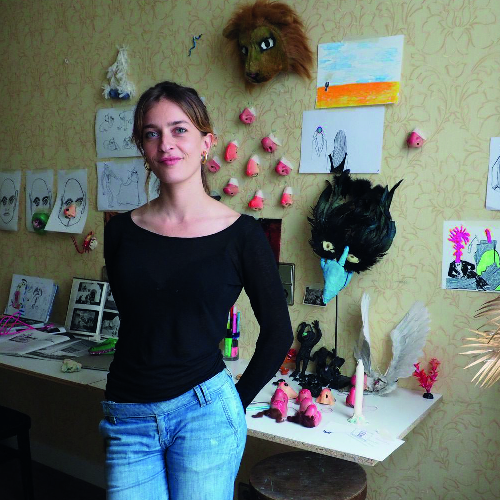
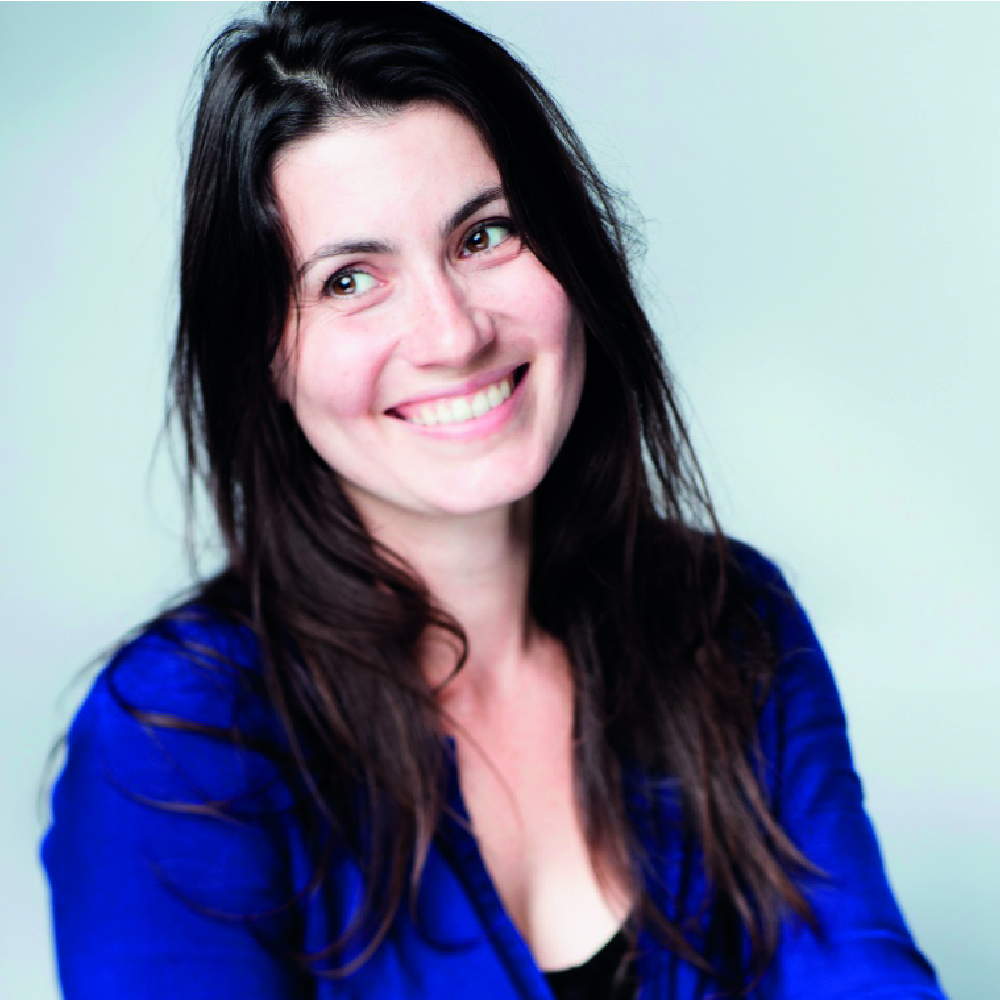
Julie Bourges

Born in 1981 in L’Aigle (France) I Lives and works between Paris and Rennes (France)

After training as a photojournalist, Julie Bourges was driven by a quest for an “invisible” reality, which she developed into a series of works in which her images oscillate between abstraction and dreamlike imagery. Since 2018, Julie has been weaving her story of women and the sea and exploring the weight of beliefs around the presence of women on boats. She received Support for Documentary Photography from the CNAP in 2021 and was the winner of the Ministry of Culture’s Great Photo Commission piloted by the BnF in 2022. After a residency at the Fondation des Treilles in 2023, she became a Villa Albertine laureate and will continue her research in Hawaii in spring 2025.

Learn more

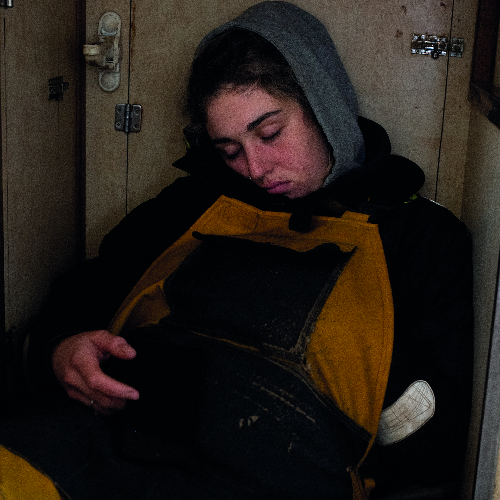
Les eaux-fortes, 2022. Photographic prints, 7 x (60 x 90) cm

Les eaux-fortes is the second in a series of photographic stories exploring the deep bond between women and the sea. It focuses on Camille, one of the few women fishermen in France. Despite seasickness, fatigue and naysayers, she persists in this profession, traditionally reserved for men. For a long time, women were seen as a threat to a ship and its crew. Although female figures were erected as protective goddesses at the bow of ships, no women were to be taken on board, nor were they to be seen before boarding. Although this legend is ancient, it still weighs heavily on those who work at sea. With each tide, Camille defies the elements and confronts the curse of those who come aboard. She is one of a long line of free and independent women who use their bodies to break free from these beliefs. Les eaux-fortes, a dreamlike tale of initiation, tells the intimate odyssey of a woman viscerally linked to the ocean. A heroine of the seas who, by setting sail, conquers her freedom and writes her own legend.

Ladislas Combeuil

Born in 1989 in Vannes (France) I Lives and works in Charente (France)

Ladislas Combeuil graduated from the Beaux-Arts d’Angers in 2015. He won the Prix du Département de l’Aveyron in 2023 and the Fondation Charles Oulmont in 2024. His work has been shown in solo exhibitions at the Chapelle Jeanne d’Arc art center in Thouars, the Pessac artothèque and the Rurart art center in Rouillé. In 2025, he will deliver a public commission for the future Juliette Ténine Health Center in Nanterre. His work oscillates between painting, sculpture and monumental, site-specific installations.

Learn more

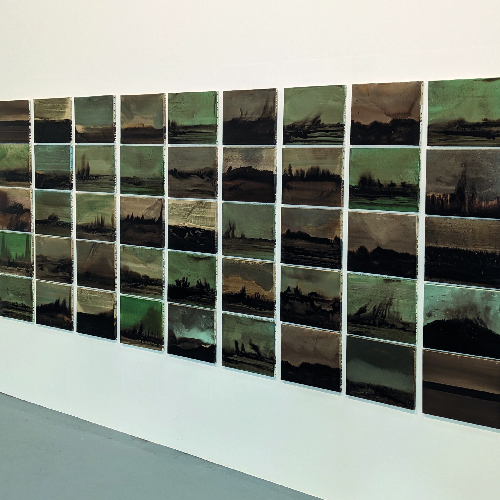
Mes petites fenêtres, 2024.Oils on canvas mounted on stretcher, 45 x (33 x 41) cm

The Mes petites fenêtres series invites us to a meticulous, meditative exploration of a multitude of landscapes. If these 45 paintings, inspired by the Romantic tradition, easily evoke Gaspard David Friedrich’s Moine au bord de la mer, here the absence of any human figure gives way to liquid landscapes, as if frozen in time. Painted on the ground with oil washes, these paintings all have a more or less clear horizon line, diluted or transformed by the movement of the paint as it dries. The colored juices evolve randomly on the surface of the canvases, which, once set, operate like any watery landscape and encourage contemplation. This technique, which leaves room for the unexpected and chance, is analogous to the geological processes and water infiltrations that give rise to Paésinas: marble slabs with motifs evoking ruiniform landscapes, often coastal.

Alioune Diagne

Born in 1985 in Kaffrine (Senegal) I Lives and works between Senegal and France

A graduate of the École des Beaux-Arts in Dakar, from 2013 the artist developed a singular style called ‘Figuro-Abstro’, in which figurative scenes emerge from a myriad of abstract signs inspired by calligraphy. Through this approach, he explores highly engaged themes. His work has been shown in numerous exhibitions, including at the Musée des Beaux-Arts in Rouen. He also represented Senegal at the 60e Venice Biennale (2024). His works can be found in the collections of museums such as the Denver Art Museum, the Museum of Contemporary Art in Saudi Arabia and the Musée des Civilisations Noires in Dakar.

Learn more

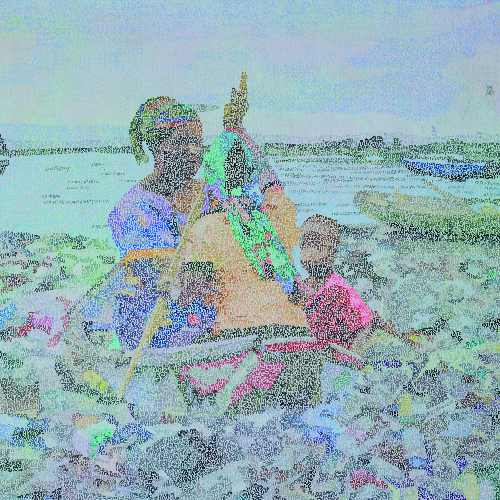
Géeju Neefare – Plastic Sea, 2024. Acrylic on canvas, 45 x (33 x 41) cm

Water is a common thread running through the work of Senegalese painter Alioune Diagne, who draws on the daily lives of fishermen and scenes of coastal life, but also on the consequences of the plundering of fish stocks in Africa and the human tragedies linked to illegal migration. In Géeju Neefare – Plastic Sea, he denounces the plastic pollution rampant along the Senegalese coast, depleting vital marine resources. This painting, with its bright colours and subtle clarity, depicts two women and a child in a pirogue close to the shore. As the viewer lingers over this scene, composed of a multitude of signs typical of his technique, he gradually discovers that the abstract shapes surrounding the boat are actually piles of plastic waste. In the background, empty pirogues evoke the fishermen driven into exile by the resulting shortage of fish. The title accentuates this double issue: Plastic Sea denounces the ecological emergency, while Géeju Neefare – unclean water in Wolof – extends the theme to the migratory tragedies that are so prevalent in Senegal. A note of hope remains, however, in the clear ocean on the horizon and the figure of the child, who in the artist’s eyes embodies another possible future.


Eleonore Geissler

Born in 1992 in Paris (France) I Lives and works in Paris (France)

A graduate of Ensba and Ensad, Eléonore Geissler completed an exchange program in the robotics department at Seoul National University. In 2024, she completed her training at Le Fresnoy. Her first animated short Alien TV, nominated for the Prix Emile Reynaud, was shown at numerous international festivals. In 2021, she won the Nuit Blanche project with CNES and a residency at the Drawing Factory (CNAP). In 2023, she was invited to Vitrines du Faubourg Saint-Honoré – Hermès and her work is featured in the collections of the Musée des Abattoirs in Toulouse.

Learn more

Le plus vieux film du monde, 2023. Diorama installation aquarium, fish, electronic, 182 x 100 x 50,4 cm

The work presented explores the discovery of a coelacanth, a 1.30-metre prehistoric fish, found in 1938 off the South East African coast by a fisherman. 400 million years old, this endangered species offers a precious glimpse into the past. Scalimetric analysis of its scales evokes the process of reading film. According to Philippe- Alain Michaud, the origins of cinema can be traced directly back to the Aquarium, which preceded the first cinematographs by several years. In this installation, the aquarium becomes an optical theater, creating a duality between film and water. The distortion of the image, the reflections of water on the ceiling, the shadowy presence of the fish, the parallel between film development and the study of fish scales. This back-and-forth between water, jar and image prompts the following question: If cinema really came from a natural process, would we still be talking about film, or about the life of the image?

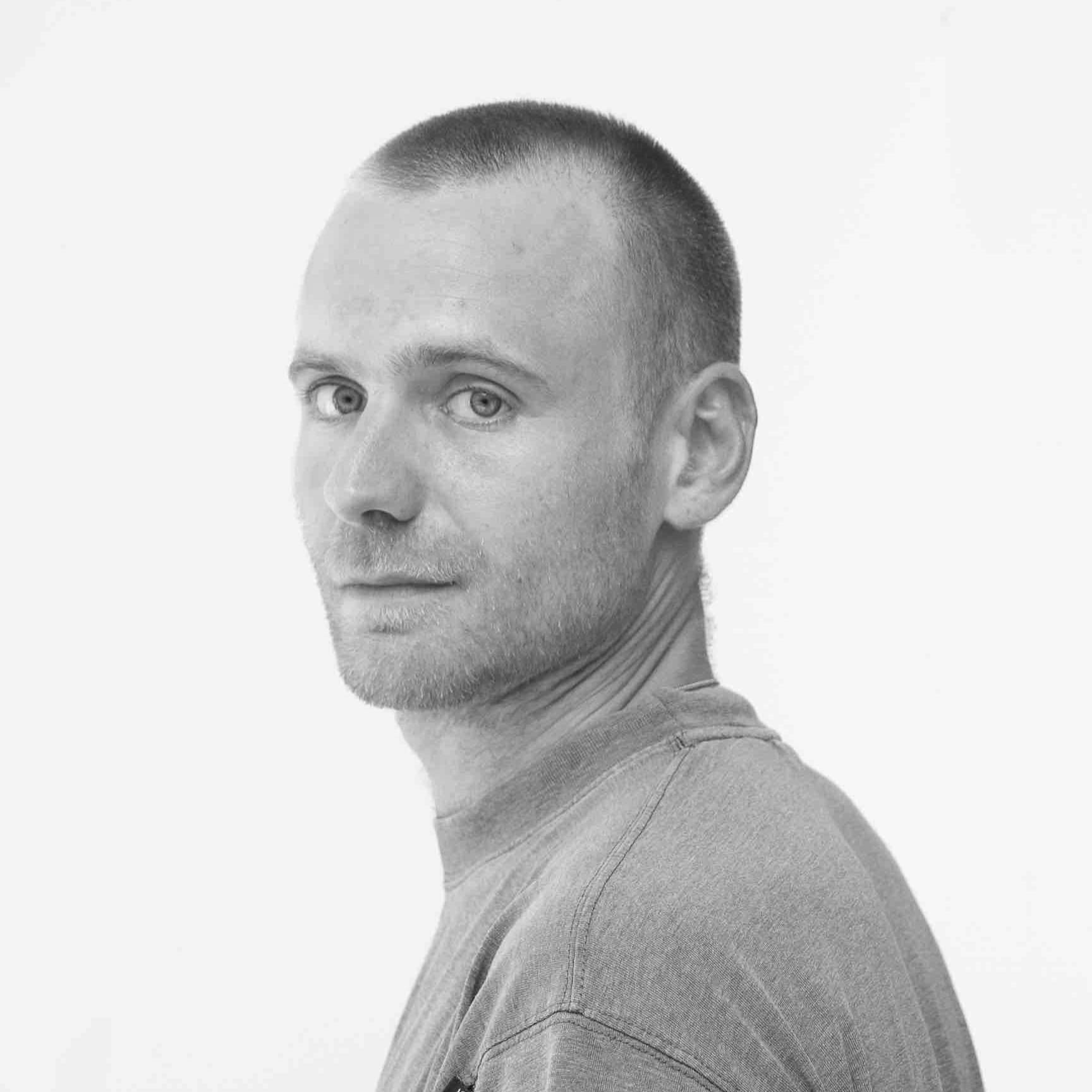
Paul Heintz

Born in 1989 in Saint-Avold (France) I Lives and works in Paris (France)

A graduate of Beaux-Arts de Nancy, Arts Décoratifs de Paris and Le Fresnoy, the artist develops his work around film and installation, in a mode between documentary and fiction, where realism is often challenged by the actors themselves. His work has been presented at contemporary art events and film festivals such as FID Marseille, IFFR Rotterdam, Paris Nuit Blanche and in art centers and museums such as the Centre Pompidou, FRAC Lorraine, FRAC Grand Large and Les Rotondes. He is the winner of the Emerige Revelation Award 2019, Revelation Livre d’Artiste 2021 and 1% Marché de l’Art in 2023.

Learn more

Nafura, 2023. Video, 27’33 min

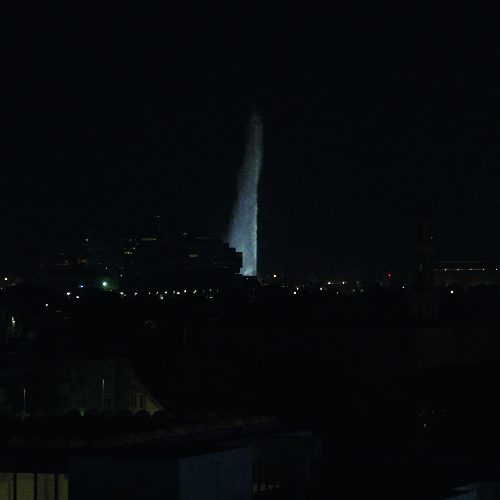
Nafura – or fountain in Arabic – is the title of Paul Heintz’s film. In the boredom of an evening’s wandering, three friends have fun reflecting on the symbolism of the fountain in Jeddah, Saudi Arabia. Their discussions about this aquatic monument, built by the king in the 1980s, turn into reflections on power and the forbidden. A road-movie of Saudi youth in search of freedom. A manifestation of the power of patriarchy, an affront to nature, Jeddah’s fountain, said to be the largest in the world, appears above all as hypocrisy – the display of a large jet of water does not prevent the desert from growing all around it, nor women from existing. Although surrounded by night, cloistered in the protective cabin of a car, their faces anonymized by spots of light, the three protagonists manage to make their voices ring out loud and clear: their insolent, humorous exchanges testify to an unquenchable thirst for freedom, which the film magnifies and extends to the point of unreality. Paul Heintz imagines what the fountain’s entrails might look like, using synthetic images interspersed with documentary footage: as it turns out, the foundations of the proud phallic symbol look like ruins.

Mehrali Razaghmanesh

Born in 1983 in Téhéran (Iran) I Lives and works in Paris (France)

Deeply influenced by Iranian art and philosophy, and situated on the threshold between photography and painting, Mehrali challenges the limits of these two media by focusing on nature. By pictorially re-imagining photographed landscapes, he seeks to bring an imaginary world to life. Rather than simply capturing nature, he seeks a visual interpretation that moves the image towards the imagination itself. His work has been exhibited internationally (Palais des Beaux-Arts de Bruxelles, Rencontres d’Arles 2019, Foam Photography Museum, Netherlands; On Earth: Imaging, Technology and the Natural World at Lieu Unique, Nantes; Photolux Festival, Italy; and CLB Berlin).

Learn more

Raw Reverie, 2022. Digital photograph, cyanotype print on fabriano 300 gr, 7x (48 x 68) cm and 150 x 105 cm

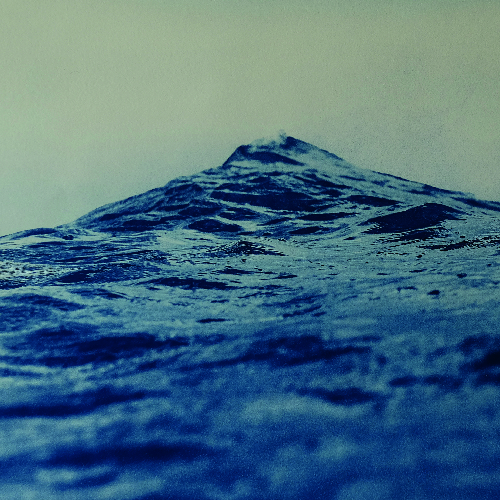
Raw Reveries is formed in the Caspian Sea, the largest inland body of water in the world. This series explores the revolutionary nature of waves, the way they are linked in a chain and how a small wave can cause a huge surge or change in the scene. The artist does not see himself as separate from the sea, but rather as part of an interconnected whole. His approach is not just environmental; it also has political, social and psychological dimensions. On the surface, this series consists of multiple portraits of waves, but underneath lies the portrait of a revolution. For years, his practice has revolved around alternative printing and the deconstruction of image layers. CMYK is no longer just four layers of colour, it has become a metaphor for the four fundamental elements: water, air, earth and fire. To preserve the poetry and remain faithful to the essence of water, he prints only the cyan layer of the sea using the cyanotype process.

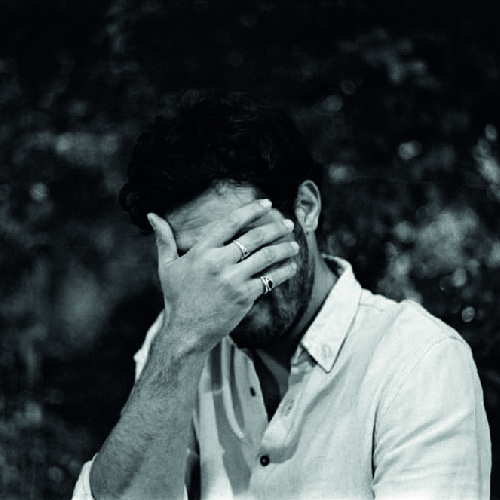
Enrique Ramirez

Born in 1979 in Las Condes (Chili) I Lives and works in Paris (France)

Enrique Ramírez is a visual artist and filmmaker. He graduated in cinema and audiovisual communication in Chile, then in t the Studio National – Le Fresnoy in France. His work explores memory, exile and migration, questioning the relationship between water, history and geopolitics. He has exhibited at the Venice Biennale in 2017, the Museo Nacional de Bellas Artes in Chile, Parque de la Memoria, Buenos Aires, and in several international institutions. In 2025, he will be a resident at the Villa Médicis in Rome 2025-2026. Through video, sculpture and installation, he creates poetic spaces where sound and image reveal invisible narratives of the contemporary world.

Learn more

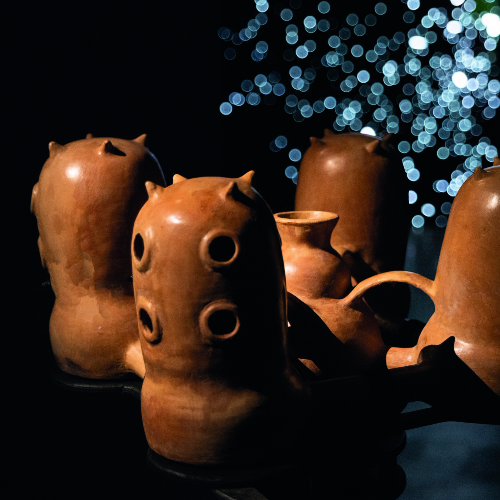
Elegías a un paisaje, 2023. Five-body vase whistle with four aerophonic systems and acoustic chambers made in Argentina , 40 x 30 x 40 cm

This sculpture with four acoustic chambers is freely inspired by a centuries-old instrument. Sculpture and instrument in one, the air and water that circulate within it produce sounds thanks to an age-old technology combining earth, water, air and movement. It hides a secret: moving water generates an autonomous soundscape. Inspired by pre- Columbian whistling bottles, it questions our relationship with sound, gesture and the invisible. By manipulating the sculpture, water becomes the real protagonist, producing unpredictable sounds. Like the waves or the rain, it inscribes a natural rhythm into the space, inviting us to listen to what surrounds us in a different way.