Announcement of the Winners

Talents contemporains 11th Edition

Last February, four expert committees selected the works or projects of 30 finalists from among 432 applicants representing 36 countries.

The 2022 Grand Jury, chaired by Jean-Noël Jeanneney, was composed of:

  • Rosa-Maria Malet – Director of the Miró Foundation 1980 – 2017, Board Member (Barcelona)
  • Constance de Monbrison – Head of the Insulindia Collections, Musée du Quai Branly – Jacques Chirac (Paris)
  • Alfred Pacquement – Honorary General Curator of Heritage (Paris)
  • Chiara Parisi – Director of the Centre Pompidou – Metz (Metz)

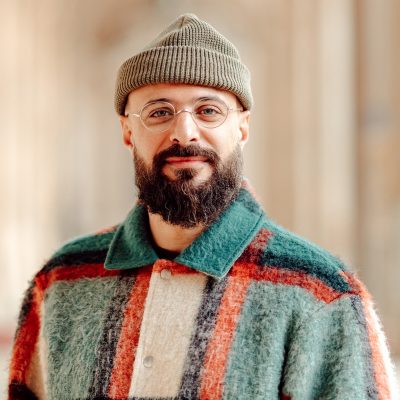
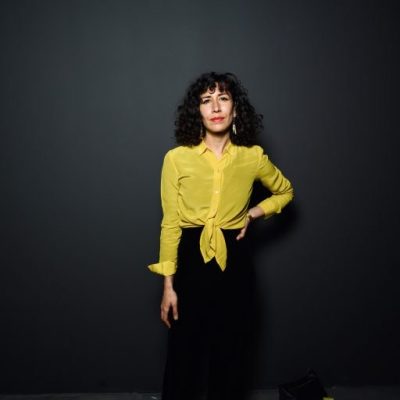
The artists revealed for this 11th edition are Marie-Anita Gaube, M’hammed Kilito, Eva Medin, and Sarah Ritter.

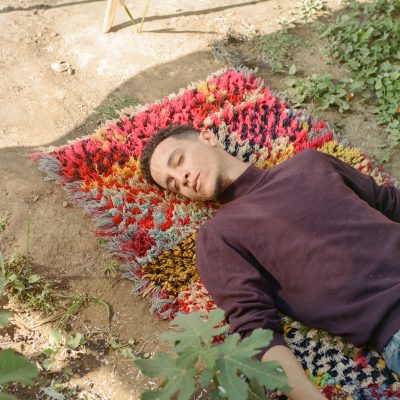
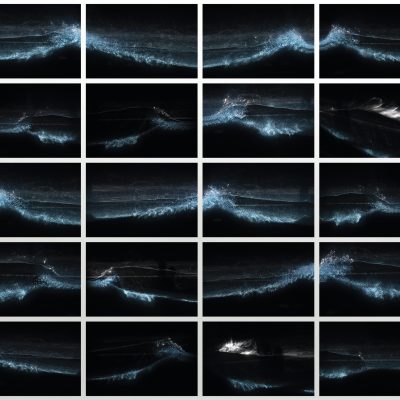
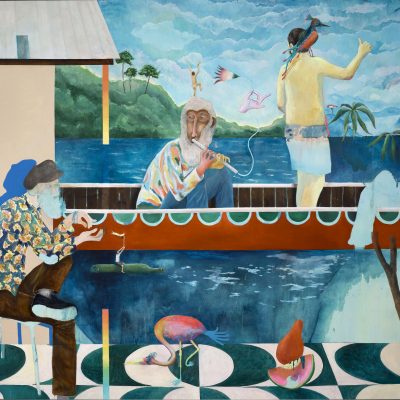
Marie-Anita Gaube presents a painting with surrealist overtones titled Can’t run away from yourself; M’hammed Kilito offers a photographic polyptych, Hooked to paradise, which addresses the issues of oasis degradation in Morocco; Eva Medin directs a video “choreographic fable” titled L’Europe après la pluie (Europe After the Rain), inspired by Philippe Curval’s science-fiction novel and a painting by Max Ernst; and finally, Sarah Ritter, with her series of 20 photographs Les vagues scélérates (Rogue Waves), explores the spaces of scientific knowledge.

We warmly congratulate the artists and look forward to welcoming their works into the collection soon.
Download the French press release

Les lauréats

Marie-Anita Gaube

Born in 1986 in Paris (France) | Lives and works in Tours (France)

A 2012 graduate of the École des Beaux-Arts de Lyon, Marie-Anita Gaube explores the concept of heterotopias which, as defined by Michel Foucault, represent “other spaces” woven into reality. In her work, painting becomes a space of dissent—a site for utopian projections or fantasies within society. Her work has recently been exhibited at the CCC OD in Tours, the Musée Paul Dini, as well as in Denmark and Mexico. In 2015, she was a laureate of the Colas Foundation.

Learn more

Can’t run away from yourself, 2020. Acrylic and oil on canvas, 237 × 290 cm.

Can’t run away from yourself is an expanding painting, where the world seems to move continuously toward an inner motion. It depicts a passage, a ritual. Water erodes certain areas of the scene and sculpts misty mountains, opening up to a celestial landscape at the top of the canvas. It is water that evaporates into fog, almost tamed by a monkey playing an intoxicating melody, giving the distant background its characteristic blue hue. Water acts as the medium for the metamorphosis of a world—in itself, to itself. A interplay of twists and ricochets forces the viewer’s gaze to shift to the other side, or “inward.” Nature, which one might have believed to be still and silent, extends its reality beneath layers of light, within the vegetation, or inside human constructions. Meanwhile, hazy, washed bodies seem at times to withdraw from the scene or undergo a metamorphosis. The artist places us before her work just as she would place us face-to-face with ourselves; as the title suggests, one cannot run away from oneself.

M’hammed Kilito

Born in 1981 in Lviv (Ukraine) | Lives and works in Rabat (Morocco)

M’hammed Kilito’s photographic practice explores the relationship between communities and their environments and questions cultural identity, the sociology of work, and climate change. He is a laureate of the Magnum Foundation and the Prince Claus Fund (2017), and has won the World Press Photo 6×6 Global Talent award (2020) and the Contemporary African Photography Prize (2020). His photographs are part of the collections of the CNAP (National Centre for Visual Arts) and the Fondation des Treilles.

Learn more

Hooked to paradise, 2021. Photographs, 5 × (80 × 80) cm.

In this polyptych composed of 5 photographs from the Hooked to paradise series, M’hammed Kilito documents the complex issues surrounding the degradation of oases in Morocco and its impact on their inhabitants. Water is the vital element in the genesis of oases and their biodiversity. With drought cycles becoming increasingly frequent and devastating, oases, which once acted as shields against desertification, are now threatened with extinction. The resulting water stress thus leads to a decline in agricultural and livestock activities and accelerates the displacement of indigenous populations. According to official statistics from the Moroccan Ministry of Agriculture, over the last century, Morocco has already lost two-thirds of its 14 million palm trees. This project was born out of the urgency and the collective demand to find a solution to this environmental catastrophe. Hooked to paradise highlights the multiple concerns of local populations, which are rarely covered by the media and largely unknown to the general public.

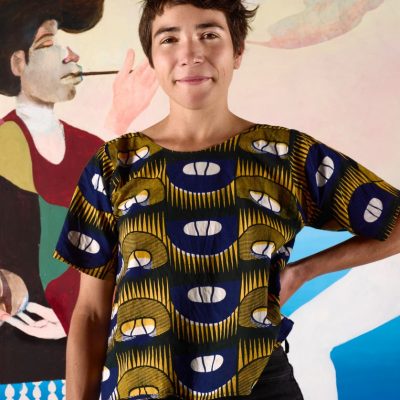
Eva Medin

Born in 1988 in Rio de Janeiro (Brazil) | Lives and works in Paris (France)

Eva Medin’s work merges the performing and visual arts, cinema, and theatricality. Drawing inspiration from science fiction, she generates immersive landscapes that hover between past and future, Earth and cosmos. Trained at the École Supérieure d’Art Plastique de Monaco and the École Nationale Supérieure des Arts Décoratifs de Paris, Eva Medin is a laureate of the Prix des Amis du Palais de Tokyo (2020). Her work has notably been exhibited at the Manifesta Biennial and the Chroniques Biennial (Marseille, 2020), as well as the Drawing Now Art Fair (Paris, 2018). Her work is currently on display at the Palais de Tokyo.

Learn more

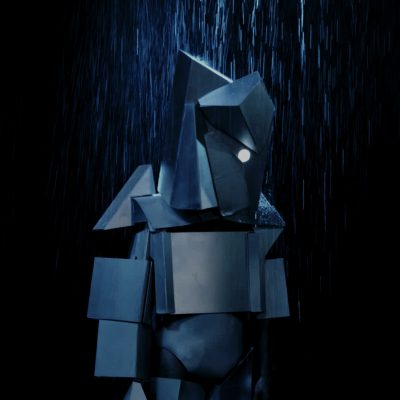
Le monde après la pluie, 2020. Video, 10 min.

Le monde après la pluie (The world after the rain) is a choreographic fable inspired by Philippe Curval’s science-fiction novel and Max Ernst’s painting, L’Europe après la pluie (Europe After the Rain)—two works that deal with transformation, rebirth, and hybridization. Intersecting the vocabularies of cinema, dance, and sculpture, Eva Medin’s video revisits the theme of metamorphosis through the motif of water and the staging of an ambiguous creature. In light of the current ecological crisis, the artist is particularly interested in science fiction, which exposes the excesses of our societies and questions the future of humanity. Under the effect of the rain, the sculpture-character in her video work undergoes deconstruction and degeneration, ultimately revealing a new creature that exists somewhere between the organic, the mineral, and the spiritual entity. Water thus takes center stage in this work: it becomes the binding element that metaphorically explores the conditions for a paradigm shift within each of us and within our societies.

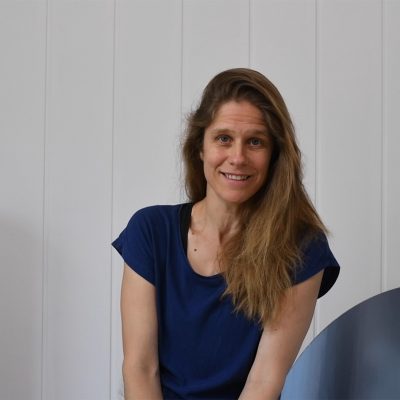
Sarah Ritter

Born in 1978 in Besançon (France) | Lives and works in Besançon (France)

Following her studies in philosophy, Sarah Ritter graduated from the École Nationale Supérieure de la Photographie d’Arles in 2008. Her work has received several awards and is featured in various public collections (including FRAC Auvergne, FRAC Franche-Comté, and the FNAC). A laureate of the research program at the Institut pour la Photographie de Lille (2021) and the Bibliothèque Nationale de France (BNF) national commission “Radioscopie de la France” (2022), the artist published a monograph with Éditions Loco in 2019, La nuit craque sous nos doigts, accompanied by a play by Christophe Fiat. Her work is currently on display at the Biennale de la Photographie de Mulhouse.

Learn more

Les vagues scélérates, 2021. Photographs, 20 × (50 × 80) cm.

The series Les vagues scélérates, consisting of 20 photographs, originated from an exploration of scientific knowledge spaces. During her research, the artist discovered that water and light behave in the exact same way—so much so that the term “rogue waves” is used in fiber optics just as it is on the ocean. Fascinated by this unexpected parallel, Sarah Ritter discovered the world of fluid mechanics, particularly wave flumes: long glass corridors filled with water where artificial waves are generated for study. Drawing from this highly artificial environment, the series offers a recomposition of impossible waves in the very place where logic reigns supreme. Here, science is used in reverse as a scenography of wonders and active fictions; by freezing motion, photography sculpts the waves and their metamorphoses. Our belief in images leads us to look for coherence where there is only montage and fake waves. They map out a universe in tension, caught between blue plastic sand and an ocean we no longer understand—a world slipping through our fingers, an uncertain world.